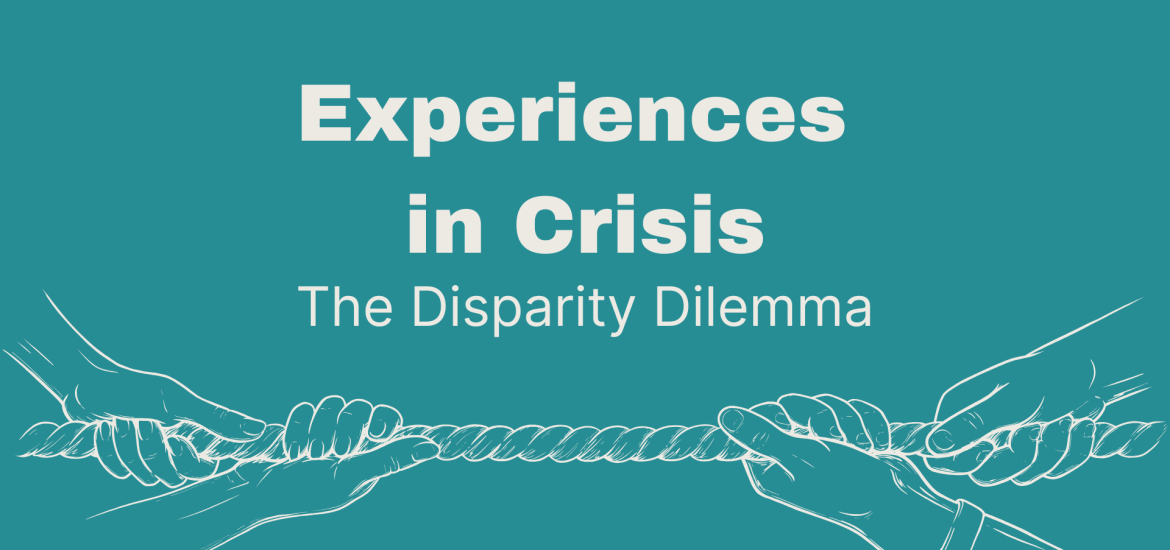

Experiences in Crisis: The Disparity Dilemma
The Customer Experience Dream: Too Good to Be True?
Customer experience (CX) is the business world’s favorite buzzword. Leaders love to tout it as their guiding star, the key to customer loyalty, and the ultimate competitive advantage. Yet, despite billions invested in CX technology, teams, and transformation projects, customers still suffer through frustrating interactions and fragmented journeys. Why? Because the way businesses are structured is fundamentally at odds with the promise of CX.
Here’s the harsh truth: CX isn’t failing because it’s a flawed idea. It’s failing because most organizations are.
A House Divided
Think about it. CX spans every touchpoint in a customer’s journey—from marketing and sales to support and retention. It requires alignment across departments that, in most organizations, couldn’t be more disjointed. Marketing is chasing leads. Sales is chasing quotas. Operations is chasing efficiency. Support is chasing resolution rates.
These functions operate with their own systems, metrics, and priorities. They’re like orchestra sections playing different songs with no conductor to unify them. The result? Chaos for the customer.
The KPI Tug-of-War
Take key performance indicators (KPIs) as an example. Marketing measures success by click-through rates and conversions. Support looks at ticket resolution times. Sales tracks revenue. Meanwhile, the customer just wants a smooth, frictionless experience. When every team defines success differently, how can they collaborate effectively?
Even with chief customer officers or CX teams trying to bridge the gaps, they’re often powerless to force alignment. They’re consultants in their own companies, fighting against deeply entrenched silos.
Is Cohesive CX a Pipe Dream?
This brings us to the heart of the matter: Is the idea of a cohesive customer experience simply too good to be true?
If you look at most businesses today, the answer might seem like “yes.” Achieving a seamless CX requires a level of cross-functional alignment and systemic change that few organizations are willing—or able—to tackle. It’s not just about implementing the latest CX technology or running customer feedback surveys. It’s about tearing down silos, rethinking KPIs, and committing to a customer-first culture at every level.
A Path Forward
But here’s the thing: CX doesn’t have to remain a pipe dream. The organizations succeeding in CX today aren’t necessarily the ones with the biggest budgets or the shiniest tools. They’re the ones willing to make bold structural changes.
- Shared Goals: Create a single, overarching CX vision with metrics that all departments share and contribute to. If sales closes a deal, marketing attracts the right audience, and support retains them, everyone wins.
- Unified Systems: Ditch disconnected tech stacks. Invest in platforms that unify data across functions, giving everyone a single view of the customer.
- Cultural Alignment: Train and incentivize teams to think beyond their own KPIs and put the customer’s journey first.
The dream of a cohesive customer experience isn’t too good to be true—it’s just too ambitious for companies unwilling to do the hard work. For those ready to step up, the rewards are immense: not just happier customers, but a competitive edge in an increasingly unforgiving marketplace.
Stop Blaming, Start Looking
If your CX strategy feels like it’s spinning its wheels, stop blaming the concept and start looking inward. What’s standing in the way of true alignment? Fix that, and you won’t just meet customer expectations—you’ll exceed them.