

Customers Are Rewriting the Self-Service Playbook
From different vantage points, Justin Robbins and Nate Brown are watching the same shift unfold in real time. Customers bypass brand channels, turn to AI-driven search and public communities, and resolve issues before companies ever enter the picture. This joint post brings those observations together to examine what the change means for self-service, trust, and CX leadership today.
Customers no longer start with a brand when they need help. They start with an AI-enabled search ecosystem that sits entirely outside the company’s control. This shift is redefining how issues are resolved, how opinions are formed, and how buying decisions take shape.
For years, self-service meant slogging through clunky IVRs, outdated knowledge bases, and rigid chatbots. Today, customers solve problems faster and with better context by turning to Google’s AI Overview, Reddit discussions, YouTube walkthroughs, large-language-model answers, and third-party experts. The center of gravity has moved.
This change is not the result of brands perfecting their portals or finally mastering knowledge management. Customers simply found something better.
The Power Shift No Brand Saw Coming
Search models trained on vast public data now surface explanations, video demonstrations, peer insights, and troubleshooting advice in seconds. These results rarely come from the brand. They come from creators, reviewers, communities, and aggregated public sources that customers find easier to navigate and more trustworthy.
A simple example illustrates the shift. When troubleshooting a camera flash connection, a quick search delivered a complete diagnosis with explanations drawn from CNET and multiple user communities.
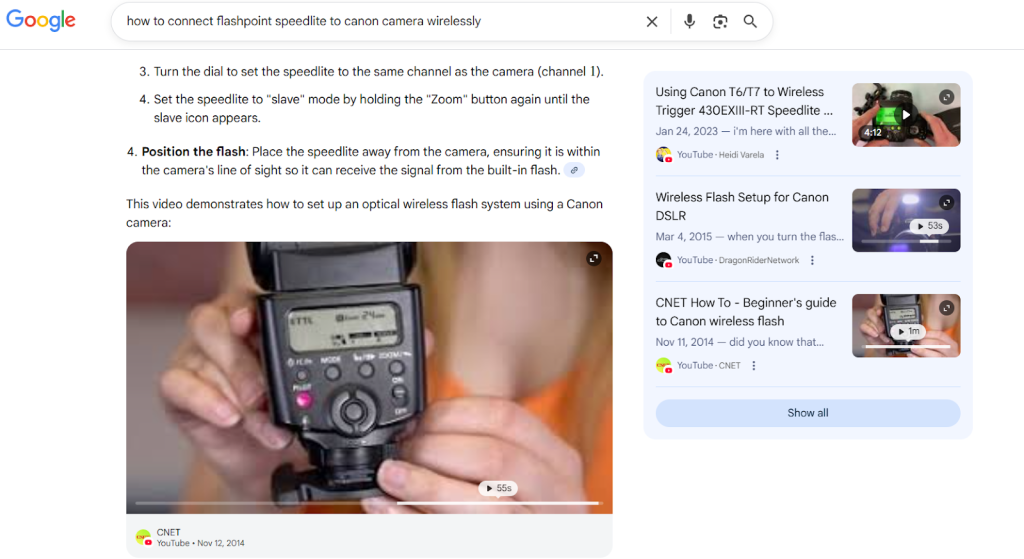
Notably, none of the information came from the manufacturers themselves. The customer journey never touched the brand.
This pattern now shapes a significant portion of problem-solving and pre-purchase research. Public ecosystems have become the de facto service front door.
The New Gatekeepers of Customer Trust
When external channels outperform brand-owned resources, the implications extend far beyond issue resolution.
Trust redistribution.
Customers trust third-party sources because they offer frictionless access, real-world context, and collective intelligence. Brands lose influence when their official guidance is harder to find or slower to update.
Visibility gaps.
A growing share of product discussions, problem-solving exchanges, and purchase considerations now take place where many organizations have no presence. Reddit alone reports that over half of online product conversations mention its platform. That scale reshapes perception long before a customer reaches the brand.
Knowledge decentralization.
Large community ecosystems—peer groups, creators, reviewers—often surface more relevant answers than internal teams. Experienced leaders have long observed that well-run peer networks can correct inaccurate content faster than official sources.
Service impact without brand contact.
A customer can form an opinion, fix an issue, or decide to churn based entirely on information the brand never produced. Traditional CX metrics fail to capture this new reality.
This moment marks a structural realignment of how trust, service, and influence operate.
The Leadership Response to a Decentralized Service World
This shift raises the standard for how brands participate in a distributed information environment. Leaders need a strategy that aligns with how customers actually behave.
- Establish a credible source of truth. A rigorously maintained knowledge layer remains essential. Search engines increasingly prioritize accuracy, freshness, structure, and authority. Organizations that treat knowledge as infrastructure, not an afterthought, earn visibility across discovery ecosystems and reduce downstream service failures.
- Participate where customers already learn. Brands cannot ignore the conversations shaping their reputation. They need a presence in the digital spaces where customers troubleshoot and evaluate products. That can include verified participation in Reddit threads, structured engagement on YouTube, and contributions to communities where expertise is demanded.
- Strengthen community-led expertise. Customer advocates, power users, and knowledgeable creators influence perceptions far more than marketing copy or help-center articles. Identify them, build relationships with them, and equip them with accurate information. Distributed trust requires distributed expertise.
- Redesign metrics around external behavior. Traditional service KPIs capture only a fraction of what customers experience. Leaders need new measures that reflect:
- Issue resolution occurring outside brand channels
- The accuracy and influence of community-driven content
- Search ecosystem visibility
- Third-party sentiment shaping intent
These metrics matter because they reflect the world customers actually experience.
The Mandate for Modern Customer Experience
Self-service now reflects the intelligence customers can access instantly across the broader digital ecosystem. Leaders who understand this shift will invest in knowledge infrastructure, community engagement, and distributed influence. Leaders who ignore it will lose ground in environments they never entered.